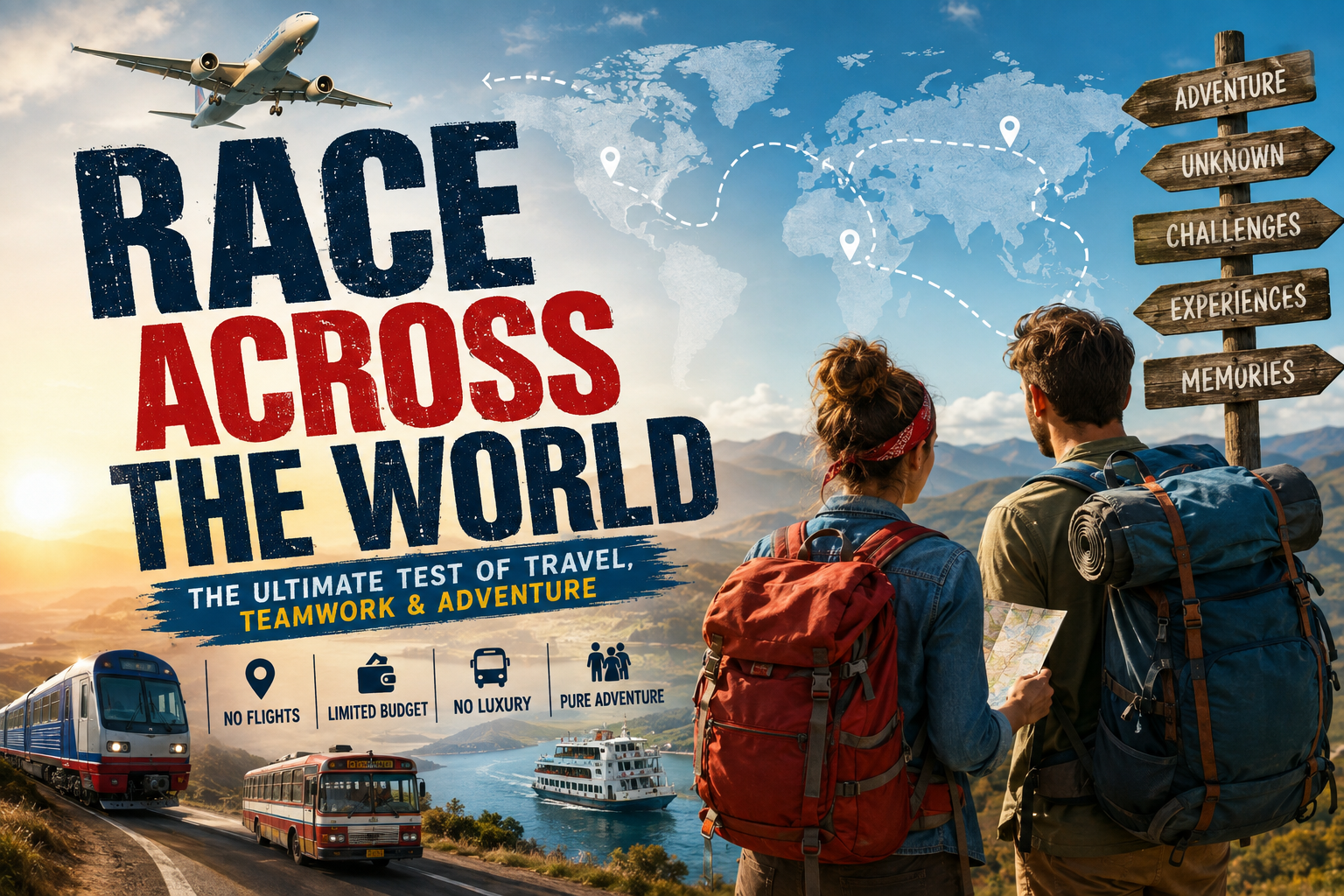
Something is exciting about traveling without knowing exactly what is waiting around the next corner. That is the idea behind Race Across the World, a travel competition that puts ordinary people into extraordinary situations. Instead of relying on luxury hotels, private drivers, or unlimited budgets, contestants have to think creatively, make smart decisions, and work together to reach their destination.
The appeal of Race Across the World comes from its simplicity. The basic challenge sounds easy: travel from one location to another as quickly as possible. In reality, getting from point A to point B can become surprisingly complicated when contestants have limited money and cannot simply take the most convenient route. Every decision matters, from choosing transportation to deciding where to sleep.
What makes the show particularly interesting is that it is not only about speed. It is also about relationships, resilience, cultural experiences, and problem-solving. Teams quickly discover that a journey across different countries can test their patience just as much as their physical energy. Sometimes the fastest-looking option turns out to be a terrible decision, while a slower route can unexpectedly save time and money.
What Is Race Across the World?
Race Across the World is a travel competition built around a simple but demanding concept: teams must travel a huge distance while working within strict limitations. Contestants generally have to rely on their own planning skills rather than modern travel conveniences. That can mean using buses, trains, boats, walking routes, and other forms of public transportation.
The format changes the way viewers think about travel. A normal tourist might book a flight, reserve a hotel, and plan every detail months. Contestants have to make decisions while they are already on the road. They need to find affordable transportation, communicate with local people, manage their money, and constantly reassess their route.
Another important part of the experience is the human side of the journey. Teams often consist of people who already know each other, such as family members, friends, or partners. Spending long hours together under pressure can bring people closer, but it can also expose disagreements that might normally stay hidden.
Why Race Across the World Is So Popular
One reason Race Across the World has attracted so much attention is that it feels different from traditional reality television. There is no need for elaborate challenges every few minutes. The journey itself is the challenge, and that makes the experience feel much more authentic.
Viewers get to see destinations through the eyes of people who are not traveling like typical tourists. Contestants may find themselves in small towns, crowded transport stations, unfamiliar neighborhoods, or remote areas. These moments often create some of the most memorable parts of the journey because they show a side of travel that standard vacation programs sometimes miss.
The show also creates natural suspense. A team can appear to be comfortably ahead and then lose valuable time because of a missed connection or transportation problem. Another team might struggle for several hours before finding an unexpected opportunity that completely changes its position. This unpredictability keeps the competition interesting from beginning to end.
How the Race Across the World Format Works
The central idea is straightforward, but the rules make the journey much harder than it initially appears. Contestants have to travel toward a specific destination while managing limited resources. They cannot simply use whatever travel option would normally be the fastest and easiest.
Money management is a major part of the competition. Teams have to think carefully about how much they spend on transportation, food, and accommodation. Spending too much early in the journey can create serious problems later, so contestants need to balance speed with financial planning.
Communication is equally important. Travelers may encounter different languages, unfamiliar transport systems, and unexpected local customs. Being willing to ask questions and interact with strangers can sometimes be more valuable than having a perfect travel plan. In many situations, confidence and adaptability can make a huge difference.
The Skills Contestants Need to Succeed
Winning Race Across the World requires much more than simply being physically fit. One of the most important skills is decision-making. Contestants constantly have to compare different routes and determine which option gives them the best chance of reaching the next checkpoint.
Budgeting is another major skill. A team that spends money without thinking can quickly put itself in a difficult position. Successful contestants tend to understand that every small expense can affect a later decision. Saving money does not necessarily mean traveling slowly; it means using resources intelligently.
Emotional control is also essential. Long journeys can be exhausting, especially when plans fail. A delayed bus, confusing station, language barrier, or disagreement between teammates can quickly create frustration. Teams that remain calm and communicate effectively often recover from problems faster than teams that allow stress to take over.
| Detail | Information |
| Main focus | Long-distance travel competition |
| Key skills | Navigation, budgeting, communication, adaptability |
| Typical contestants | Friends, couples, family members, or other partners |
| Career relevance | Travel planning, tourism, media, communication, logistics |
| Important personality traits | Patience, confidence, teamwork, resilience |
The Importance of Teamwork
A major reason Race Across the World is so fascinating is the way it tests relationships. Traveling together is very different from spending a few hours with someone at home. Contestants may be tired, hungry, stressed, and unsure about what to do next.
Good teamwork can turn a difficult situation into a manageable one. One person might be better at navigation, while another may be more comfortable speaking to strangers. Dividing responsibilities according to individual strengths can make a team much more efficient.
However, teamwork does not mean that contestants always agree. In fact, disagreements are a natural part of the competition. The important thing is how teams handle those disagreements. Successful partnerships learn to listen, compromise, and make decisions without allowing personal frustration to destroy their progress.
Travel Without the Usual Comforts
Modern travel is incredibly convenient. People can book flights from their phones, compare hotels instantly, and use digital maps to find almost anything. Race Across the World removes much of that comfort and forces contestants to interact more directly with their surroundings.
This makes the journey more unpredictable but also more meaningful. Instead of moving from one airport to another, contestants often experience local transportation and communities at a much closer level. They have opportunities to meet people they would probably never encounter during a traditional vacation.
That unpredictability is part of the charm. A journey may take longer than expected, but the unexpected experiences can become more valuable than the original plan. The show demonstrates that travel is not always about reaching a destination as efficiently as possible. Sometimes the most interesting stories happen because something goes wrong.
What Viewers Can Learn From Race Across the World
Although the program is designed as entertainment, it also offers useful lessons about traveling. Perhaps the biggest lesson is the importance of flexibility. Even the best travel plan can fail, so being prepared to change direction is an important skill.
The show also highlights the value of interacting with local people. Travelers who are willing to ask questions and communicate respectfully often discover options that are not obvious from a map or travel website. A simple conversation can sometimes lead to useful information about transportation, accommodation, or the best route.
Another lesson is that expensive travel is not always better travel. Contestants have to experience destinations with limited resources, proving that memorable experiences do not necessarily require luxury. Creativity, curiosity, and a willingness to step outside your comfort zone can be just as important as money.
Race Across the World and Career Skills
Interestingly, the abilities demonstrated in Race Across the World can also relate to several real-world careers. Travel and tourism professionals, for example, need strong organizational and communication skills. They often have to solve unexpected problems while helping customers or managing complicated schedules.
The competition also demonstrates skills that are useful in logistics and project management. Contestants constantly evaluate resources, timelines, routes, and risks. These are similar skills used by professionals who manage deliveries, events, transportation networks, or large projects.
Media and communication careers can also benefit from similar qualities. The ability to communicate with different types of people, remain confident under pressure, and adapt quickly is valuable in many professional environments. In that sense, the show is not just about traveling; it demonstrates practical skills that can transfer into everyday life and work.
The Emotional Side of the Journey
Behind the competition and strategy, there is a strong emotional element. Contestants are often pushed far outside their normal routines. They may experience excitement one moment and complete exhaustion the next.
These extreme situations can reveal interesting sides of people’s personalities. Someone who appears quiet at home may become a confident problem-solver during the journey. Another person who normally takes charge may discover that they need to listen more carefully to their teammate.
The emotional changes are part of what makes the show relatable. Most viewers will never have to race across an entire continent under competition conditions, but many people understand what it feels like to travel with someone, face unexpected problems, and learn something new about themselves along the way.
Is Race Across the World Worth Watching?
For viewers who enjoy travel, adventure, strategy, and real human stories, Race Across the World offers a refreshing combination of all four. It does not depend entirely on manufactured drama because the journey itself naturally creates tension.
The strongest part of the show is arguably its authenticity. Contestants have to deal with real transportation systems, real distances, real budgets, and real fatigue. That makes their successes feel earned rather than scripted.
It is also a great reminder that travel is about more than famous landmarks. Some of the most memorable moments can come from conversations with strangers, unexpected detours, difficult decisions, and small victories along the way.
Final Thoughts on Race Across the World
Race Across the World takes a simple travel concept and turns it into a challenging test of strategy, teamwork, patience, and determination. The competition proves that reaching a destination is rarely as straightforward as it looks on a map.
What makes the experience stand out is the balance between competition and human storytelling. Contestants are racing against other teams, but they are also dealing with their own fears, frustrations, relationships, and limitations. Every journey becomes a personal experience as well as a competition.
Ultimately, Race Across the World is a reminder that the best adventures are often the ones that do not go exactly according to plan. When people are forced to slow down, communicate, adapt, and experience places more directly, travel becomes much more than simply getting somewhere. It becomes a story worth remembering.












5 Comments