A tennis match can look simple from the outside, but the ball itself plays a major role in how the game feels. The right tennis ball can affect speed, bounce, control, durability, and even how comfortable a player feels during a long practice session.
Not every tennis ball is designed for exactly the same purpose. Some are made for competitive hard-court matches, while others are designed for clay courts, high-altitude conditions, training, or younger players learning the game. There are also differences in pressure, felt, durability, and playing characteristics.
Whether you are buying your first can of tennis balls, preparing for a competitive match, or simply looking for reliable balls for regular practice, understanding these differences can help you make a smarter choice.
What Is a Tennis Ball?
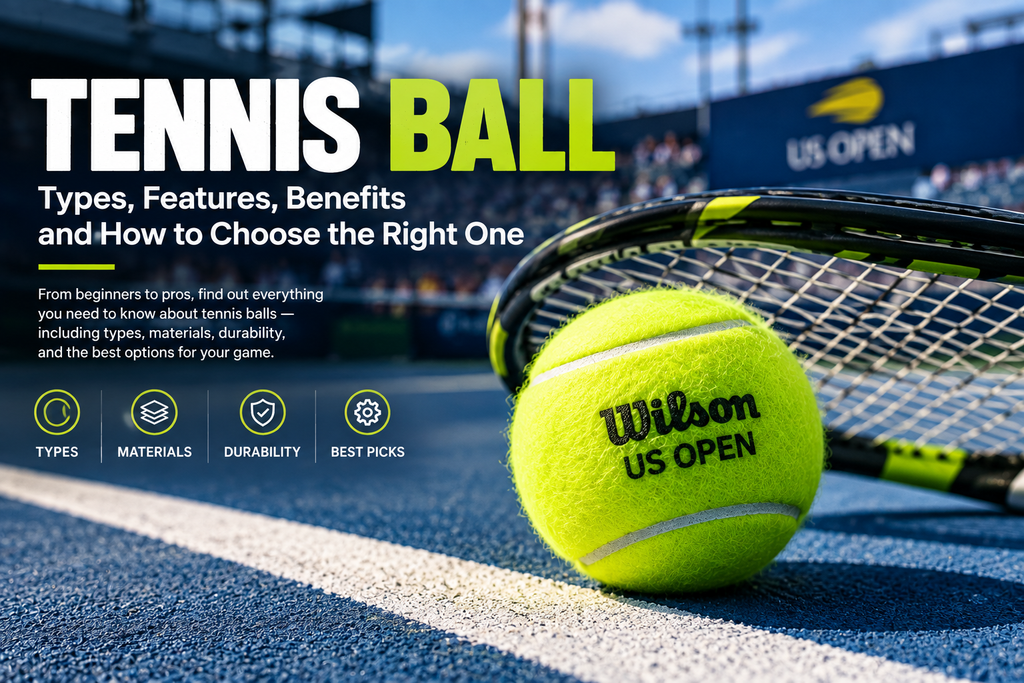
A tennis ball is a hollow, pressurised or pressureless rubber ball covered with a woven felt material. It is designed to bounce consistently and provide the characteristics required for tennis play.
The familiar bright yellow colour makes the ball easy to track against different backgrounds, particularly during fast rallies. Its felt covering also influences how the ball moves through the air and interacts with the racket and court.
For competitive tennis, players need balls that meet the requirements of the relevant tennis rules and tournament. Recreational players have considerably more flexibility and can choose balls according to their playing level and court.
How Is a Tennis Ball Made?
A modern tennis ball generally consists of a rubber core covered by a felt outer layer. The rubber construction provides the basic bounce and compression characteristics, while the felt influences the ball’s movement and interaction with the court.
Pressurised balls contain internal pressure that contributes to their lively bounce and responsive feel. Pressureless balls rely more heavily on their rubber construction and are designed to maintain their playing characteristics without depending on internal air pressure.
The felt can also differ depending on the intended surface. Manufacturers produce different versions to suit conditions such as hard courts and clay courts.
What Makes a Good Tennis Ball?
A good tennis ball should provide a predictable bounce, suitable speed, consistent feel, and enough durability for its intended use.
For competitive players, consistency can be particularly important. A ball that changes noticeably during a match can affect timing and shot selection.
For beginners and recreational players, durability and value may be more important than achieving the exact feel preferred by professional players.
| Feature | Why It Matters |
| Bounce | Influences timing and shot control |
| Felt | Affects feel, movement and durability |
| Pressure | Influences liveliness and response |
| Durability | Determines how long the ball remains usable |
| Surface suitability | Helps match the ball to the court |
| Speed | Affects the pace of rallies |
Types of Tennis Balls Explained
Pressurized Tennis Balls
Pressurized tennis balls are widely used in competitive tennis. Their internal pressure gives them a lively bounce and responsive feel.
They generally provide the familiar performance associated with match-play tennis. However, they gradually lose their internal pressure after opening, which can eventually change their bounce and feel.
For serious match play, fresh pressurized balls are often preferred because consistency matters.
Pressureless Tennis Balls
Pressureless tennis balls do not rely on internal air pressure to produce their bounce. Instead, their rubber construction provides the necessary playing characteristics.
One major advantage is durability. Because there is no internal pressure to gradually escape, pressureless balls can remain usable for a long time.
They are often useful for recreational players, practice sessions, ball machines, and training environments where longevity is important.
Regular-Duty Tennis Balls
Regular-duty tennis balls are commonly designed with a felt construction intended for clay or indoor court conditions.
The felt is generally designed to work appropriately with surfaces where excessive fuzz pickup can be an issue.
Players should always check the manufacturer’s recommended surface before purchasing a specific ball.
Extra-Duty Tennis Balls
Extra-duty tennis balls are commonly associated with hard-court play. Their construction is designed to handle the demands of harder surfaces.
The felt can become worn as the ball is repeatedly used, but a suitable extra-duty ball can provide good durability for regular outdoor play.
If you primarily play on hard courts, checking whether a ball is designed for that surface is an important part of choosing the right product.
High-Altitude Tennis Balls
High-altitude are designed for playing conditions where elevation affects how the ball travels.
At higher elevations, air density is lower, which can influence ball flight. Specially designed balls can help players achieve more appropriate playing characteristics.
If you play at significant altitude, check the competition or facility requirements before choosing a standard or high-altitude ball.
Low-Compression Tennis Balls
Low-compression tennis balls are designed to help younger players and beginners develop their skills. They generally move more slowly and bounce differently from standard adult tennis balls.
These balls are useful for learning because players can have more time to react and develop basic strokes.
Different stages of junior tennis use different ball speeds and compression levels, so players should follow the ball recommendations associated with their age and development stage.
How to Choose a Tennis Ball
Consider Your Court Surface
The court surface should be one of the first things you consider when choosing a tennis ball.
Hard courts can be demanding on felt, while clay courts interact differently with the ball. Indoor conditions can also produce different playing characteristics.
Choosing a ball specifically intended for your surface can help provide a more predictable experience.
Think About Your Playing Level
Beginners do not necessarily need the same tennis ball used in high-level competition.
A developing player may benefit from a lower-compression ball that provides a slower and more manageable game. Intermediate and advanced players may prefer standard balls that closely match competitive conditions.
The right choice should match your ability rather than simply copying what a professional player uses.
Check the Ball’s Durability
If you play several times a week, durability becomes important.
Pressureless balls can be useful for extended training because they do not depend on internal pressure in the same way as pressurized balls.
If you are playing an important match, however, consistency and playing characteristics may matter more than getting the maximum number of hours from each ball.
Consider Pressure and Feel
Some players prefer the lively response of a fresh pressurized ball, while others appreciate the consistent long-term performance of pressureless balls.
Your preferred feel can also depend on your racket, playing style, and court surface.
If possible, try different types during practice sessions before buying a large quantity.
Tennis Balls for Different Court Surfaces
| Court Surface | Ball Consideration |
| Hard court | Extra-duty options are commonly used |
| Clay court | Regular-duty options are commonly suitable |
| Indoor court | Surface-specific or regular-duty options may work |
| High altitude | High-altitude balls may be appropriate |
| Junior training | Low-compression balls are commonly used |
The table provides a general guide rather than a universal rule. Tournament regulations and manufacturer recommendations should always take priority.
Tennis Ball Brands
Several major sporting-goods brands produce tennis balls for recreational and competitive players. Common names include Wilson, Dunlop, Penn, Babolat, and Slazenger.
Different brands offer multiple ball families, so comparing brands alone is not enough. A player’s choice should also consider the exact model, court surface, intended level of play, durability, and price.
Tournament-level balls may have very different characteristics from entry-level practice balls made by the same manufacturer.
Pressurized vs Pressureless Tennis Balls
| Feature | Pressurized | Pressureless |
| Bounce | Lively | More consistent over time |
| Initial feel | Responsive | Firmer |
| Long-term durability | Moderate | Generally high |
| Internal pressure | Yes | No |
| Match play | Common choice | Less common |
| Practice | Very suitable | Very suitable |
| Ball machines | Possible | Often useful |
| Longevity | Decreases as pressure is lost | Generally longer-lasting |
Neither design is automatically right for every player.
Pressurized balls can provide the familiar match-play feel that many tennis players prefer. Pressureless balls can be particularly useful when durability and long-term practice value are priorities.
How Long Do Tennis Balls Last?
The lifespan of a depends on how frequently it is used, the playing surface, storage conditions, and the type of ball.
A pressurized ball can gradually lose its bounce and become less lively after repeated use. The felt can also become worn and fluffy.
A pressureless ball can last considerably longer because it does not rely on internal pressure in the same way.
Competitive players may replace balls more frequently to maintain consistent performance, while recreational players may continue using them until the bounce or felt has noticeably deteriorated.
How to Store Tennis Balls
Proper storage can help protect between sessions.
Keep them away from extreme heat, excessive moisture, and direct sunlight. A cool, dry environment is generally preferable.
For pressurized balls, unopened cans are designed to preserve the internal pressure until they are opened. Once opened, the balls will eventually begin changing as they are used and exposed to normal conditions.
Avoid leaving for long periods in a hot car or another location with extreme temperatures.
Common Tennis Ball Buying Mistakes
There are several easy mistakes to avoid when purchasing tennis balls.
- Buying a ball without checking the intended court surface.
- Choosing a junior ball when you actually need a standard adult ball.
- Assuming every tennis ball from the same brand performs identically.
- Ignoring durability when buying balls for frequent practice.
- Using old balls for important competitive matches.
- Choosing only by price without considering playing characteristics.
- Buying high-altitude balls without understanding when they are required.
A few minutes spent checking the ball’s specifications can make the buying decision much easier.
Frequently Asked Questions About Tennis Balls
What is the best tennis ball?
There is no single that is perfect for every player. The right choice depends on the court surface, playing level, preferred feel, durability requirements, and whether the ball is intended for competition or practice.
What is the difference between pressurized and pressureless tennis balls?
Pressurized use internal pressure to create a lively, responsive feel. Pressureless balls rely on their rubber construction and generally maintain their characteristics for longer.
How often should you replace tennis balls?
Replacement depends on usage. Competitive players may replace balls frequently, while recreational players can continue using them as long as the bounce, felt, and overall performance remain acceptable.
Can tennis balls be used on any court?
Different tennis balls are designed for different surfaces and conditions. Always check the manufacturer’s recommendation and any tournament requirements before using a specific ball.
Are pressureless tennis balls good for practice?
They can be very useful for practice because of their durability. They are also commonly considered for ball machines and extended training sessions.
What tennis balls are best for beginners?
Beginners can consider low-compression tennis balls because their slower characteristics can make learning and rallying easier. Standard balls can be introduced as players develop.
Why do tennis balls come in cans?
Pressurized tennis balls are commonly sealed in pressurised cans to help preserve their internal pressure before use.
What colour is a tennis ball?
Modern tennis balls are typically fluorescent yellow. This colour helps players track the ball during fast rallies against the court and surrounding background.
Conclusion
The right tennis ball can change the feel of a training session or match, which is why choosing one should involve more than simply picking the cheapest can on the shelf.
Start by considering your court surface and playing level. Then look at whether you prefer a pressurized or pressureless design, how much durability you need, and whether a standard or low-compression ball is more appropriate.
For competitive play, consistency and the correct specifications are particularly important. For recreational training, durability and value can become bigger priorities.
Once you understand these differences, choosing tennis balls becomes much easier. Instead of focusing only on brand names, you can select a ball that actually matches your game, your court, and the way you train.