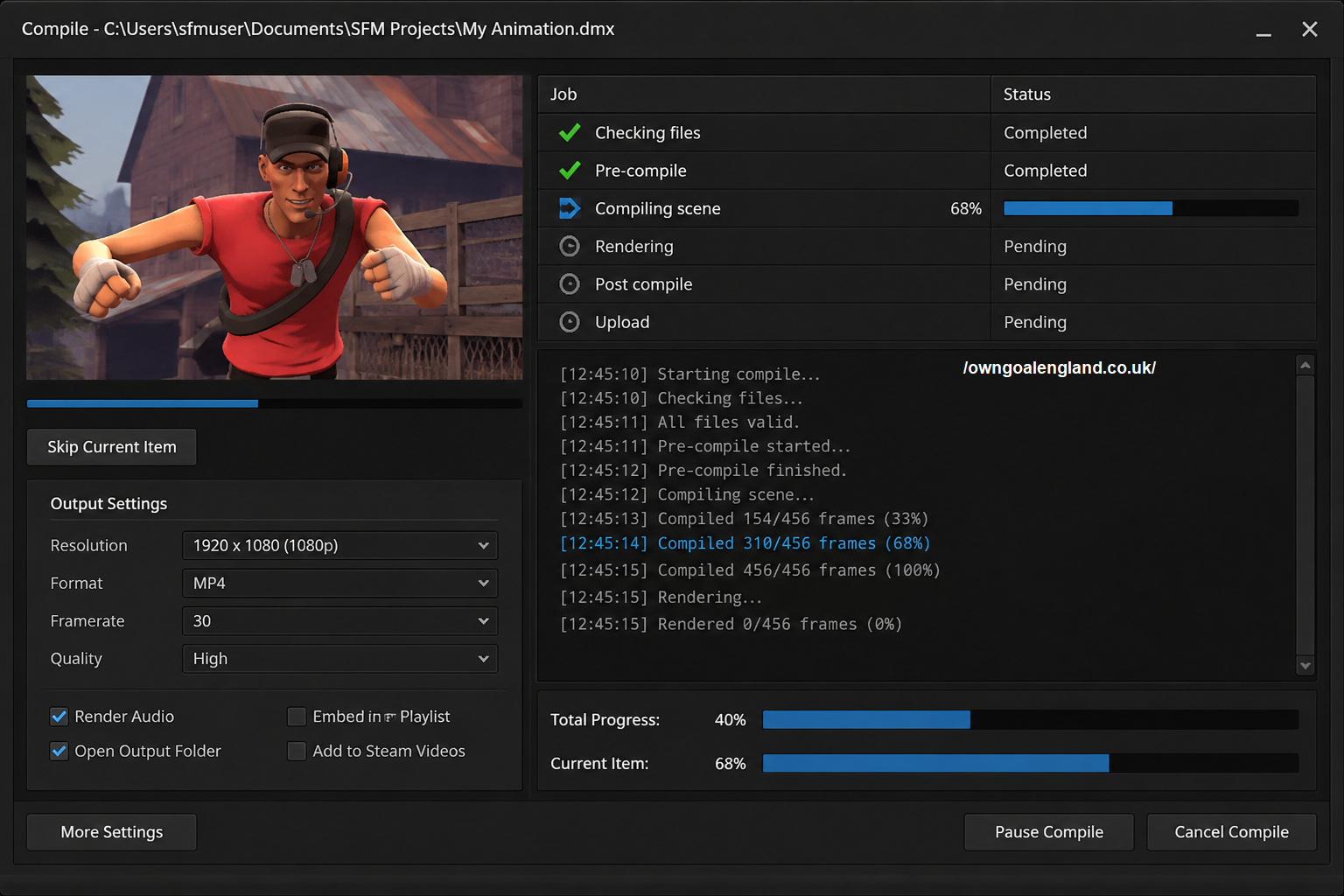
If you have come across the term SFM Compile, especially while working with Source Filmmaker, you may have wondered what it actually means. At first glance, the phrase sounds technical, but the basic idea is fairly easy to understand once you know how Source Filmmaker handles models, animations, materials, and other assets.
SFM Compile generally refers to the process of preparing or converting custom assets so they can work properly inside Source Filmmaker (SFM). This can involve compiling 3D models, creating the necessary files, assigning materials, setting up animations, and making sure everything follows the structure expected by the Source engine.
For creators who want to move beyond the default SFM library, understanding this process is extremely useful. It can open the door to custom characters, props, weapons, environments, and other assets. However, compiling assets can also become frustrating when a model refuses to appear, textures are missing, or the compiler produces errors. This guide explains the concept in simple language and covers the most important things you should know.
What Does SFM Compile Actually Mean?
SFM Compile usually describes the process of taking source asset files and turning them into files that Source Filmmaker can recognize and use. A creator might start with a 3D model, texture files, animation data, and configuration files. These pieces need to be organized and processed correctly before SFM can use them as an in-game or cinematic asset.
The word compile is important because the process is not simply about copying a model into an SFM folder. Source-engine assets often depend on specific file structures and compiled formats. A model may look perfectly fine in a 3D program but still fail to load correctly in SFM if its supporting files have not been prepared correctly.
This is why SFM compiling can feel confusing to beginners. There are several different files involved, and each one has a particular role. Once you understand what those files do, the process becomes much less intimidating. Instead of seeing compilation as a mysterious technical step, you can think of it as preparing an asset for the Source engine.
Why Is SFM Compile Important for Source Filmmaker Users?
One of the biggest advantages of SFM Compile is the ability to create scenes that go beyond the standard assets included with the software. Custom models allow filmmakers and artists to introduce characters, objects, clothing, environments, and other visual elements that may not be available by default.
SFM Compile becomes important when those custom assets need to be converted into a format that the program can actually use. Without proper preparation, a model might not appear in the model browser at all. In other cases, the model may load but have missing textures, incorrect proportions, broken animations, or other visual problems.
For experienced creators, compiling is also useful because it gives them much more control over their projects. Rather than depending entirely on existing workshop content, they can prepare their own assets and customize them for specific scenes. That flexibility is one of the main reasons learning the basics of SFM compilation is worthwhile.
Understanding the Files Used in SFM Compilation
Before trying to compile anything, it helps to understand the different types of files commonly associated with Source-engine models. The exact setup can vary depending on the asset and workflow, but several file types appear frequently in SFM projects.
Model compilation commonly involves source files and configuration information that tell the compiler how the final model should behave. The resulting model files are then placed in the appropriate SFM directory. Textures and materials are handled separately, which is why simply having a compiled model does not always guarantee that everything will look correct.
Material files are particularly important. A model can successfully load while appearing completely purple, black, white, or otherwise incorrect because the engine cannot locate the required textures. This is one of the most common problems beginners encounter.
The folder structure matters just as much as the files themselves. Source Filmmaker expects assets to follow specific paths. If a material exists but is stored in the wrong directory, the engine may behave as though the material does not exist. Keeping the file structure organized from the beginning can prevent a lot of unnecessary troubleshooting later.
How the SFM Compile Process Generally Works
The compilation process usually begins with a model or asset that has been created or exported from another program. The creator first needs to make sure the model itself is suitable for the Source engine. This includes checking geometry, bones, materials, textures, and other important elements.
Next, the asset is prepared using the appropriate Source-engine compilation tools. Configuration files provide instructions about things such as the model’s name, materials, skeleton, collision information, and other properties. The compiler reads these instructions and generates the files required by the engine.
Once compilation has finished, the resulting files are placed into the correct SFM game or usermod directory. The creator can then launch Source Filmmaker and check whether the asset appears correctly. This testing stage is essential because successful compilation does not always mean that the asset is completely ready.
A good workflow is therefore more than simply clicking a compile button. It involves preparation, compilation, installation, testing, and troubleshooting. Treating these stages separately makes the entire process easier to manage.
Common SFM Compile Problems and What They Usually Mean
One of the most common problems is that the compiled model does not appear in Source Filmmaker. This can happen for several reasons, including an incorrect installation path, an incorrectly configured model, or a compilation problem. Checking the generated files and confirming that they were placed in the expected directory is a good first step.
Missing textures are another frequent issue. If the model loads but looks purple or otherwise incorrect, the problem is often related to materials or texture paths. The model may be searching for a material in one folder while the actual material exists somewhere else. Reviewing the material paths carefully can often reveal the problem.
Animation and rigging problems can be more complicated. A model may appear correctly but have unusual movements, broken joints, or an incorrect skeleton. These problems are often connected to how the model was rigged before compilation. In such cases, recompiling without fixing the underlying skeleton or animation setup may not solve anything.
How to Make SFM Compile Easier for Beginners
The easiest way to avoid frustration is to start with a simple asset rather than immediately attempting a complicated character. A basic prop can help you understand the relationship between source files, materials, compiled files, and SFM directories without introducing complicated rigging issues.
Organization is equally important. Keep source files, textures, material files, and compiled assets in clearly named folders. Avoid randomly moving files between directories because it becomes difficult to identify which path the compiler or SFM is actually using.
It is also useful to change only one thing at a time when troubleshooting. If you modify the model, materials, folder structure, and compiler settings simultaneously, you may not know which change solved or caused the problem. Testing individual changes makes debugging much more predictable.
Finally, keep copies of working versions. If a new compilation suddenly breaks an asset, having an earlier version allows you to compare the changes and return to a stable setup. This simple habit can save a surprising amount of time.
SFM Compile and Custom Models
Custom models are one of the biggest reasons people become interested in SFM compilation. Artists often want to bring characters or objects from other projects into Source Filmmaker for animation and cinematics.
However, transferring a model from another 3D environment is not always straightforward. Different programs use different formats, coordinate systems, material systems, skeleton structures, and animation setups. A model that works perfectly in its original software may need significant preparation before it can function correctly in SFM.
The quality of the original model also matters. Clean geometry, sensible naming, properly organized materials, and a reliable skeleton can make the compilation process considerably easier. On the other hand, a poorly prepared model can produce problems at almost every stage.
For this reason, SFM Compile should be viewed as part of a larger asset-development workflow. The compiler cannot magically fix every problem inside a model. Good preparation before compilation generally produces much better results afterward.
The Role of Materials and Textures in SFM Compile
Materials deserve special attention because they are responsible for much of what you actually see on a model. A compiled model without properly configured materials may technically load but still look completely wrong.
Textures are normally referenced through material definitions. Those definitions tell the Source engine which texture files should be used and how they should be displayed. If the paths are incorrect, the engine cannot find the required resources.
When troubleshooting a material issue, it is helpful to work backward. First confirm that the texture file exists. Then check the material definition and make sure it references the correct texture location. Finally, verify that the material itself is stored in the location expected by the model.
This systematic approach is much more effective than repeatedly recompiling the model and hoping the issue disappears. Most missing-texture problems are caused by paths, filenames, formats, or folder organization rather than the model compiler itself.
SFM Compile vs. Simply Importing a Model
It is easy to assume that importing and compiling are the same thing, but they are not necessarily identical. Importing generally refers to bringing an already compatible asset into a program. Compilation involves processing source assets into a format or structure that the Source engine can use.
This distinction becomes important when working with custom content. You cannot always take a random 3D model file and expect SFM to recognize it immediately. The asset may need to be converted, configured, compiled, and installed correctly.
Understanding this difference also helps explain why some downloadable SFM assets are ready to use while others come with additional files and instructions. A creator may have already completed the compilation process before distributing the asset.
Is SFM Compile Difficult to Learn?
For someone completely new to Source Filmmaker, SFM Compile can initially seem complicated. There are unfamiliar file extensions, directories, configuration files, and engine-specific requirements. The terminology alone can make the process feel more advanced than it actually is.
The good news is that you do not need to understand everything at once. Start by learning what the major files do, how Source Filmmaker organizes content, and how a basic model moves from source files to a usable asset.
Once you successfully compile a simple object, the process becomes much easier to understand. From there, you can gradually move toward more complex models, custom rigs, animations, and advanced material setups.
Like most technical creative skills, practice makes a significant difference. The first successful compilation may take some trial and error, but later projects usually become much faster because you already understand the workflow.
Final Thoughts on SFM Compile
SFM Compile is essentially about preparing and processing custom assets so they can work properly inside Source Filmmaker and the Source engine. While the process may initially look complicated, the basic concept is straightforward: prepare the asset, configure it correctly, compile it, install the resulting files, and test everything inside SFM Compile .
The most important lesson is that compilation is only one part of the process. Model quality, material paths, textures, skeletons, folder organization, and configuration all contribute to the final result. If something goes wrong, looking at each part individually is usually the fastest way to identify the cause.
For anyone serious about creating custom Source Filmmaker content, learning SFM Compile is a useful skill. It provides greater creative freedom and makes it possible to work with assets that are not available in the default SFM Compile library. Once the basic workflow becomes familiar, compiling custom content can go from being a frustrating technical task to a normal part of the creative process.
You May Read More
7 Amazing Things About Harry Kane Wife You Didn’t Know
Jude Bellingham Girlfriend: A Look at the Football Star’s Dating Life and Personal World












2 Comments