Introduction to FIFA World Cup Brackets
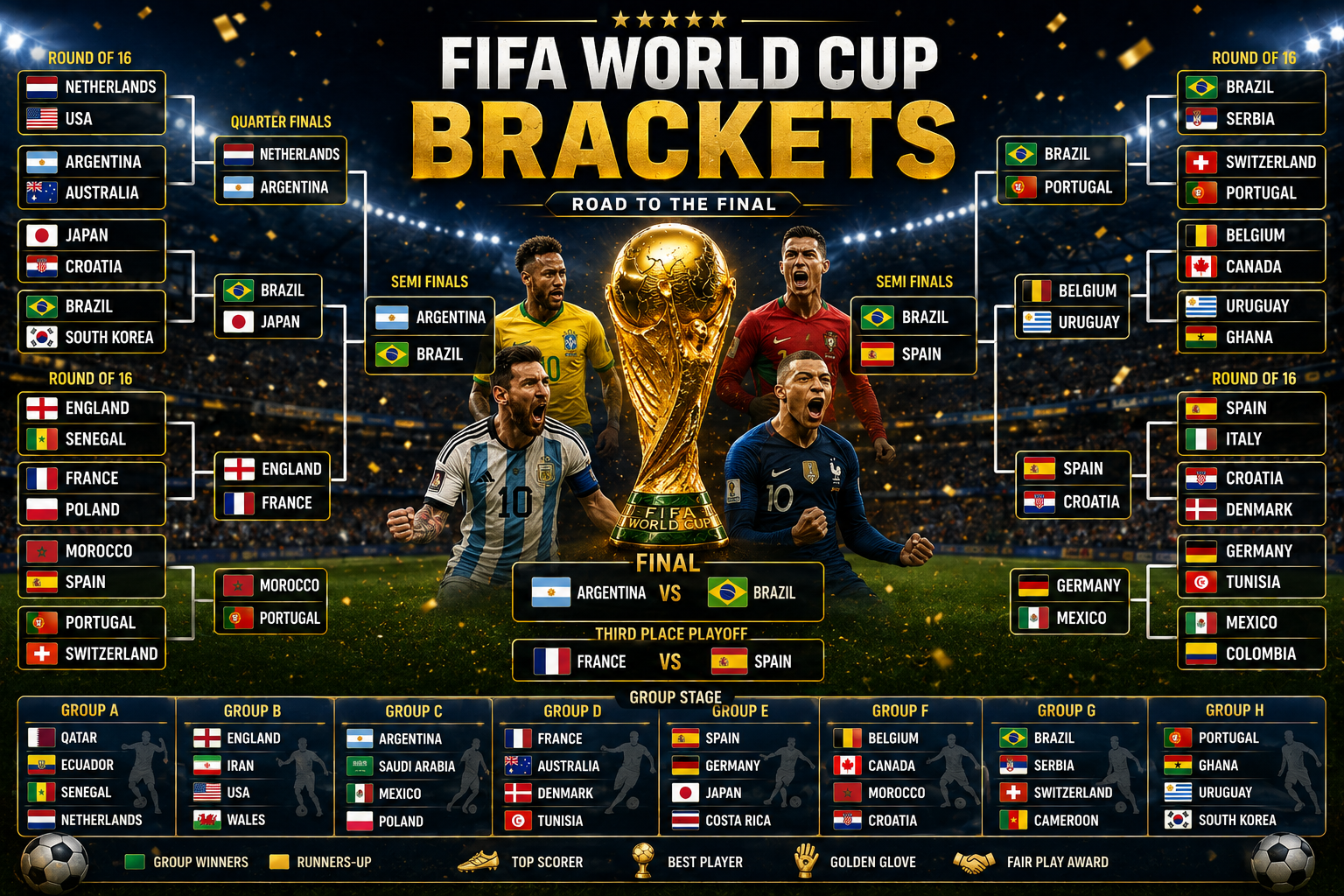
The FIFA World Cup brackets are one of the easiest ways for football fans to understand how the tournament moves from the group stage to the final. Instead of looking through dozens of separate fixtures, a bracket gives you a simple picture of which teams can meet in the knockout rounds and how they can eventually reach the championship match.
Winter Olympics 2026: Amazing Results, Winners and Highlights
The FIFA World Cup Brackets has always been about high-pressure football, but the expanded 2026 tournament introduced a bigger format than previous editions. The competition featured 48 teams divided into 12 groups of four. After the group stage, the top two teams from each group and the eight best third-place teams advanced to the Round of 32.
For fans, this made the FIFA World Cup brackets even more interesting. With an additional knockout round, teams had to survive one more elimination match before reaching the Round of 16. Every victory became increasingly important because one bad performance could immediately end a team’s World Cup journey.
How FIFA World Cup Brackets Work
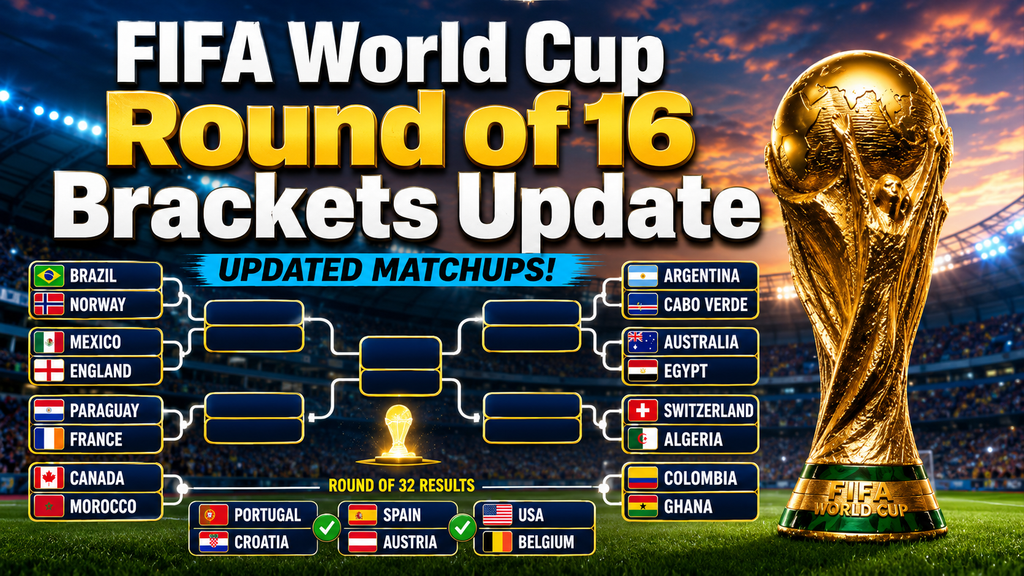
A FIFA World Cup Brackets is basically a roadmap for the knockout stage. Once the group stage is completed, qualified teams are placed into predetermined knockout paths. From that point onward, the competition becomes single elimination, meaning the winner advances while the loser is eliminated.
The 2026 World Cup introduced the Round of 32 as the first knockout stage. The tournament then continued through the Round of 16, quarter-finals, semi-finals and final. There was also a third-place match for the two teams that lost their semi-finals.
This structure creates a fascinating situation for supporters. A team may have a difficult opponent in the first knockout round and, if it wins, face an even stronger opponent later. Therefore, looking at a bracket is not only about seeing the next match. It also helps fans understand a team’s potential route toward the trophy.
FIFA World Cup Bracket Structure
The expanded World Cup format has a very different knockout structure from the traditional 32-team tournament. Previously, 16 teams moved from the group stage into the Round of 16. In 2026, 32 teams entered the knockout stage.
Here is a simple overview of the knockout pathway:
| Knockout Round | Teams Involved | Matches |
| Round of 32 | 32 teams | 16 |
| Round of 16 | 16 teams | 8 |
| Quarter-finals | 8 teams | 4 |
| Semi-finals | 4 teams | 2 |
| Third-Place Match | 2 teams | 1 |
| Final | 2 teams | 1 |
The most important thing to remember is that every knockout match is a winner-takes-all contest. If a match is level after normal time, extra time and a penalty shootout can be used to determine which team progresses.
This makes the bracket much more exciting than a regular league table. In league football, a team can recover from a poor result over many matches. In a World Cup knockout bracket, there may be no second chance.
Understanding the Round of 32
The Round of 32 is the biggest change for fans following the modern World Cup bracket. With 48 teams participating, 32 teams qualify for the first knockout round. The top two teams from each of the 12 groups automatically progress, while eight of the best third-place teams also qualify.
This means finishing first or second in a group remains extremely important, but even third-place teams have an opportunity to continue theirFIFA World Cup Brackets campaign. That extra possibility can make the final group matches particularly dramatic.
The Round of 32 also creates more potential matchups between traditional football powers and emerging teams. A strong third-place team could suddenly find itself facing one of the tournament favorites. That unpredictability is one of the reasons the new bracket structure attracts so much attention.
The Round of 16 and the Road to the Quarter-Finals
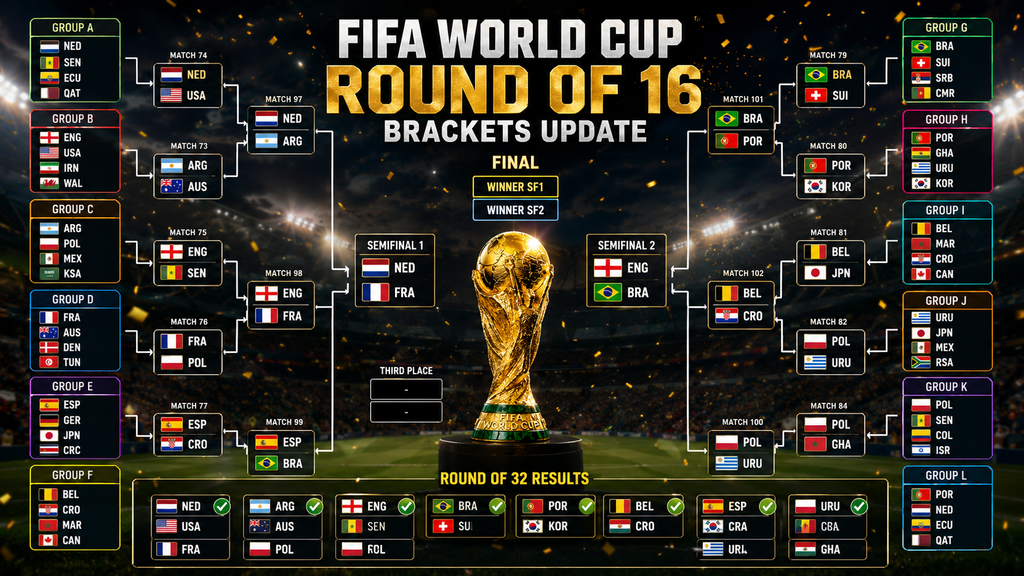
Once the Round of 32 is complete, the tournament becomes more familiar to longtime FIFA World Cup Brackets fans. Sixteen teams remain, and the winners move into the Round of 16.
At this stage, there is much less room for mistakes. Teams that have already played several matches must manage fatigue, injuries and pressure. Coaches also have to think carefully about substitutions and tactical changes because there is no opportunity to replay a knockout fixture.
The Round of 16 is often where the tournament begins to feel truly intense. The number of remaining teams becomes smaller, the quality of opposition generally becomes stronger, and every match has the atmosphere of a final.
Quarter-Finals: Where the Bracket Gets Serious
The quarter-finals reduce the competition to just eight teams. At this point, every surviving nation has a realistic opportunity to dream about lifting theFIFA World Cup Brackets trophy.
The bracket becomes especially useful here because fans can see which potential semi-final opponents are waiting on each side of the draw. A team may have avoided one major favorite earlier in the tournament, only to discover that the same opponent could be waiting in the semi-finals.
Quarter-final matches also tend to produce some of the most memorable moments in FIFA World Cup Brackets history. Penalty shootouts, late goals, defensive battles and dramatic comebacks can all decide which four teams survive.
Semi-Finals and the Final Two Paths
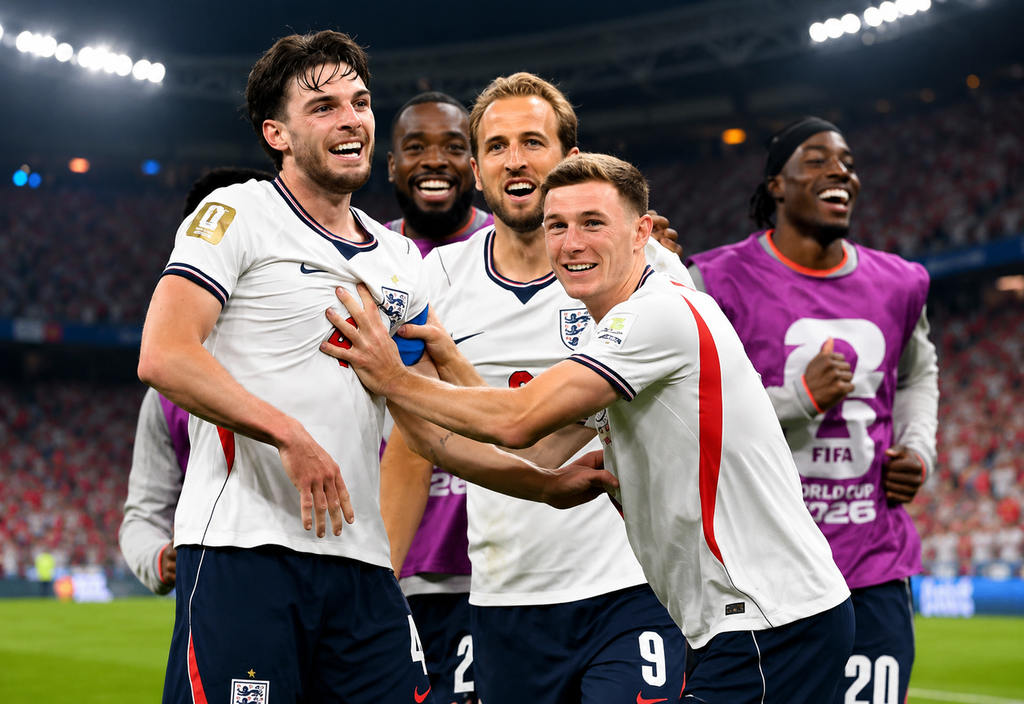
The semi-finals are where the bracket narrows to just four teams. Two matches determine which nations will play for the world championship and which will compete for third place.
At this stage, experience can become just as important as talent. Players are dealing with enormous pressure, while managers must make decisions that could define their careers. A single tactical mistake can change the entire direction of aFIFA World Cup Brackets campaign.
The two semi-final winners then meet in the final. The losing teams are given another opportunity to finish third through the third-place match. For the finalists, however, there is only one objective: winning the FIFA World Cup Brackets.
FIFA World Cup Brackets and Group-Stage Results
One of the most interesting aspects of the bracket is how group-stage performance can influence the knockout route. Finishing first can provide a different path from finishing second, while third-place qualifiers can enter the knockout stage through specific predetermined matchups.
The 2026 World Cup featured 12 groups, labeled A through L. Each group contained four teams, and every team played three group matches. This created 72 group-stage games before the knockout bracket began.
| Group Stage | Number |
| Groups | 12 |
| Teams per Group | 4 |
| Matches per Team | 3 |
| Total Group Matches | 72 |
| Teams Advancing | 32 |
This structure means that fans should not look only at a team’s points total. Goal difference, goals scored and other tiebreaking factors can become important when teams finish level.
Why FIFA World Cup Brackets Are So Popular
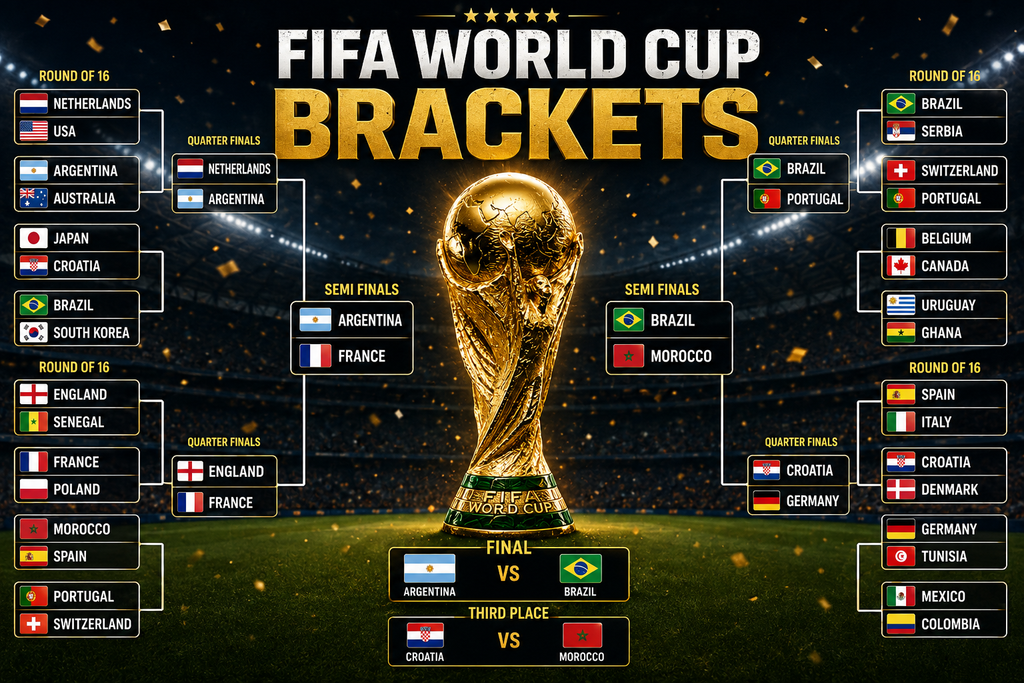
The biggest advantage of a bracket is simplicity. Football tournaments can involve complicated tables, standings and qualification scenarios, but a bracket turns the knockout stage into an easy visual journey.
Fans can quickly see which teams are on the same side of the competition and which nations could potentially meet in later rounds. This is particularly useful when following several teams at the same time.
Brackets are also popular on social media because fans can create predictions. Supporters can fill in their expected winners and imagine a potential final before the tournament reaches its conclusion. It adds another layer of entertainment to the competition.
FIFA World Cup Bracket Prediction Strategy
Predicting a World Cup bracket is never easy. Football has too many variables, including injuries, form, tactical decisions and unexpected performances. Even a heavily favored team can be eliminated by an opponent having an exceptional day.
A sensible prediction starts with group-stage performance. Teams that consistently create chances, defend well and control matches are usually easier to trust than teams depending on individual moments.
However, reputation should not be the only factor. FIFA World Cup Brackets history is full of surprises, and a team that looks average before the tournament can suddenly become extremely difficult to beat once the knockout stage begins.
How to Read a FIFA World Cup Bracket
Reading a bracket is actually quite simple once you understand the basic layout. Start with the Round of 32 and follow each winner toward the Round of 16. The winners of those matches then advance into the quarter-finals.
From the quarter-finals, the bracket normally splits into two paths toward the semi-finals. The winner of one semi-final meets the winner of the other in the final.
A simplified example looks like this:
| Stage | Path A | Path B |
| Round of 32 | Team A vs Team B | Team C vs Team D |
| Round of 16 | Winner vs Winner | Winner vs Winner |
| Quarter-Final | Winner advances | Winner advances |
| Semi-Final | Path A winner | Path B winner |
| Final | Winner | Winner |
The actual tournament bracket is more detailed because multiple matches feed into each subsequent round, but the basic principle remains the same.
The 2026 FIFA World Cup Bracket
The 2026 FIFA World Cup was historic because it became the first edition with 48 participating teams. The tournament was hosted across Canada, Mexico and the United States and featured 104 matches in total.
The tournament began on June 11, 2026, and the final was scheduled for July 19. The expanded format meant that finalists played eight matches instead of the traditional seven.
The knockout bracket therefore contained an additional stage compared with previous 32-teamFIFA World Cup Brackets This gave more nations the opportunity to reach the knockout rounds while also adding another elimination match for teams hoping to win the trophy.
How the Bracket Affects Teams and Coaches
A team’s potential bracket route can influence tactical decisions throughout the tournament. Managers may think about squad rotation, player fitness and the possibility of facing particular opponents later.
For example, a coach may rest an important player in a group-stage match if qualification is already secure. The goal is not simply to win every individual game but to have the strongest possible squad available when the knockout rounds begin.
Players also understand that the pressure increases with every round. A mistake in the group stage may be recoverable, but a similar mistake in the quarter-final could send a team home. That psychological difference makes knockout football unique.
FIFA World Cup Brackets and Football Fans
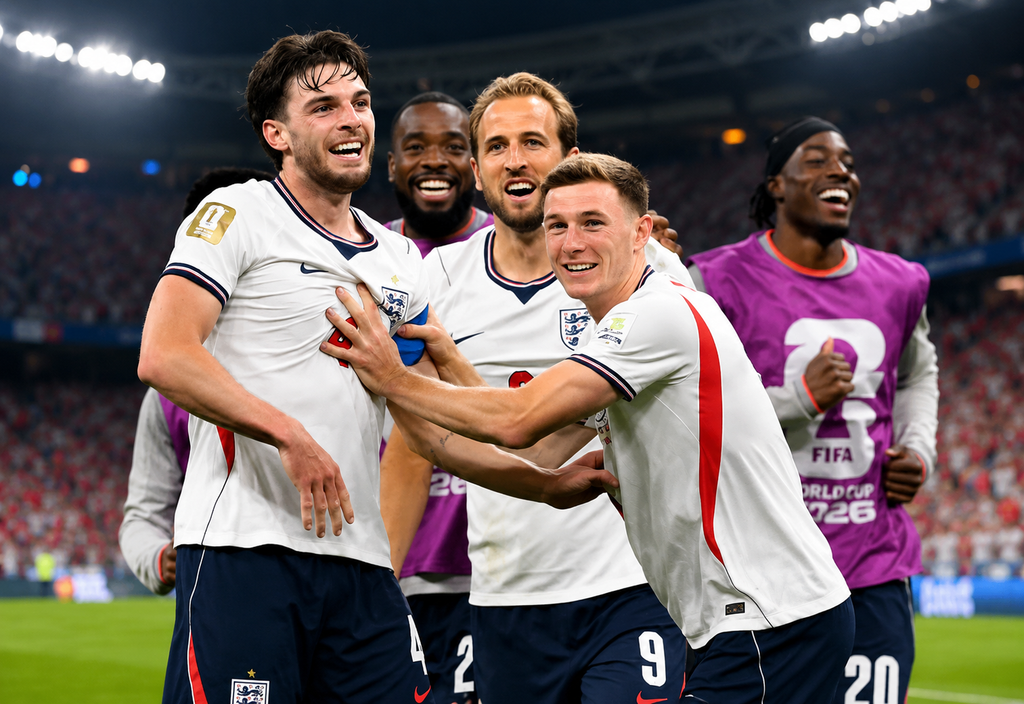
For supporters, the bracket becomes almost as exciting as the matches themselves. Fans often print brackets, share predictions with friends and follow potential matchups throughout the competition.
It is also a useful tool for people who do not watch every group-stage game. Instead of memorizing the entire tournament schedule, they can follow their favorite team’s path through the knockout rounds.
The bracket also encourages friendly competition among fans. People can make predictions, compare their choices and see who correctly predicts the eventual champion.
Final Thoughts on FIFA World Cup Brackets
The FIFA World Cup brackets provide a clear picture of how the world’s biggest football tournament moves from the group stage toward the championship. With the introduction of the 48-team format, the knockout stage became larger and more complex, making bracket tracking even more useful.
The 2026 structure featured 12 groups of four teams, followed by a Round of 32, Round of 16, quarter-finals, semi-finals and final. The expanded system created more matches, more possibilities and more opportunities for unexpected teams to make a deep run.
Ultimately, a bracket is more than a collection of boxes and matchups. It tells the story of a tournament. Every line represents a possible journey, every knockout match represents another obstacle, and the final path leads to football’s biggest prize.
For fans, understanding the FIFA World Cup brackets makes following the tournament easier and more enjoyable. Whether you are predicting the winner, tracking your favorite national team or simply enjoying the drama, the bracket gives you a complete picture of the road to the FIFA World Cup Brackets trophy.









3 Comments