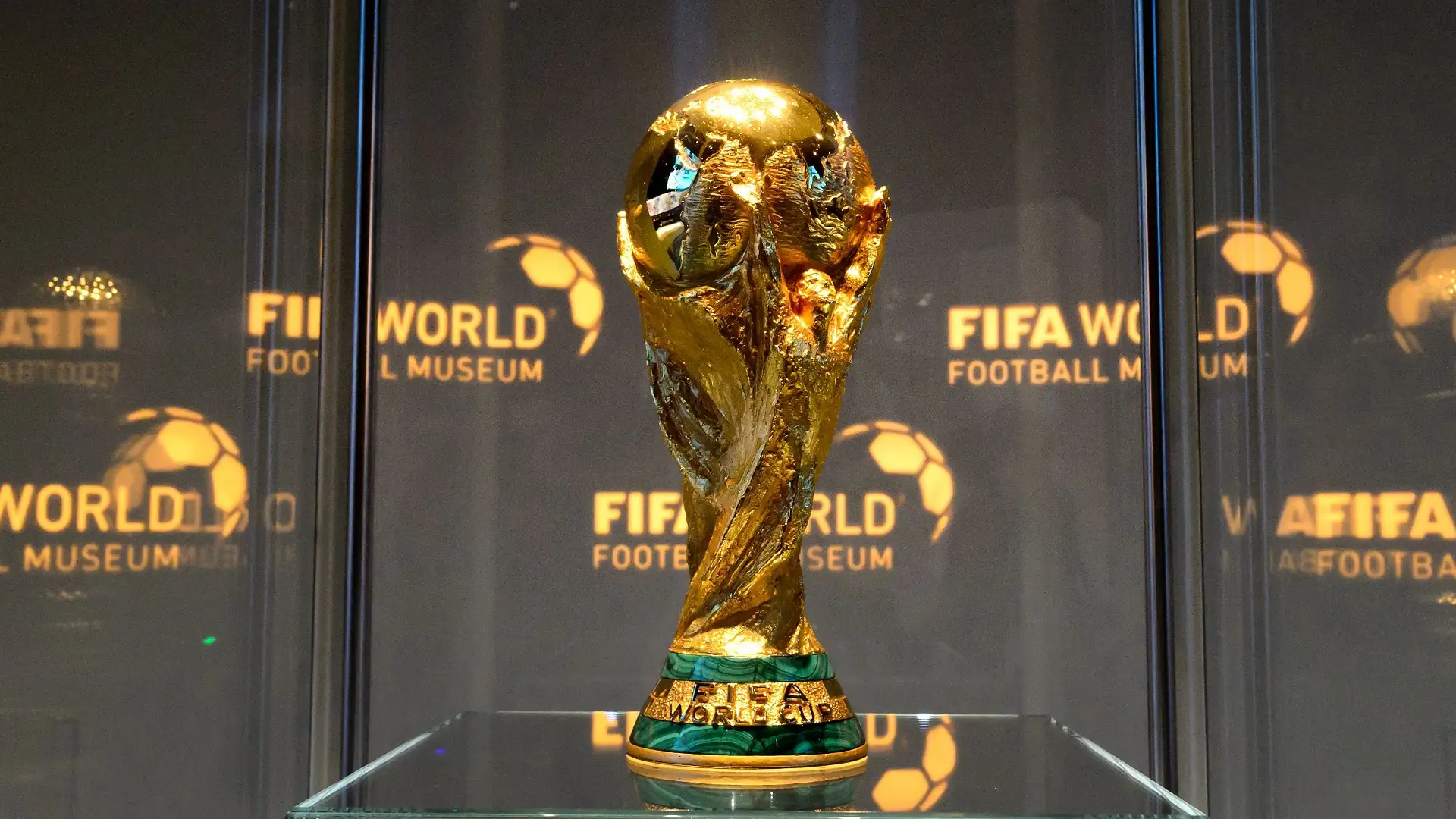
The World Cup is the biggest stage in international football and one of the most watched sporting events on the planet. Every four years, national teams from around the world come together with one goal: to lift the most famous trophy in football.
What makes the World Cup so special is the mixture of football, national pride, history, emotion, and unforgettable moments. A tournament can turn an unknown player into a global star, while one dramatic goal can become part of football history forever.
The 2026 edition took the competition to another level. Hosted by Canada, Mexico, and the United States, it featured 48 teams, 104 matches, and 16 host cities, making it the biggest World Cup ever staged.
What Is the World Cup?
The FIFA World Cup is an international football tournament where national teams compete to become world champions. Unlike club competitions, players represent their countries rather than their professional teams.
The tournament brings together different football cultures from every continent. Some nations arrive with a long history of success, while others simply hope to make an impression against the world’s strongest teams.
The importance of the competition goes beyond football. For many supporters, watching their national team at a World Cup is an emotional experience connected to national identity, family traditions, and memories created across generations.
The History of the World Cup
The first men’s FIFA World Cup took place in Uruguay in 1930. Thirteen nations participated in that inaugural tournament, and Uruguay became the first country to lift the trophy after defeating Argentina in the final.
The tournament gradually became larger and more competitive. Different countries have dominated different periods, with Brazil, Italy, Germany, Argentina, France, Spain, England, and Uruguay among the nations that have created important World Cup histories.
Over the decades, the World Cup has also produced some of football’s greatest legends. Players such as Pelé, Diego Maradona, Zinedine Zidane, Ronaldo, Lionel Messi, and many others have created unforgettable tournament moments.
Why the World Cup Is So Popular
The biggest attraction of the World Cup is its rarity. Unlike domestic leagues that run every year, the World Cup comes around only once every four years.
That waiting period makes the tournament feel special. Fans spend years discussing possible winners, upcoming generations of players, memorable previous tournaments, and the chances of their national teams.
There is also something unique about international football. A player who spends most of the year playing for a club suddenly wears his country’s shirt and represents millions of supporters. That emotional connection gives World Cup matches a different feeling from ordinary club fixtures.
The 2026 World Cup: The Biggest Edition Yet
The 2026 World Cup was historic because it expanded to 48 teams and 104 matches. The tournament was staged across Canada, Mexico, and the United States, with games taking place in 16 host cities.
The tournament opened on June 11, 2026, in Mexico City, with Mexico facing South Africa. The final was played on July 19 at New York New Jersey Stadium.
The expansion meant more countries had an opportunity to experience the World Cup. It also created a longer tournament with more matches, more travel, and a broader geographical footprint across North America.
World Cup 2026 at a Glance
| Feature | World Cup 2026 |
| Host Countries | Canada, Mexico and United States |
| Teams | 48 |
| Total Matches | 104 |
| Host Cities | 16 |
| Opening Date | June 11, 2026 |
| Final | July 19, 2026 |
| Opening Match Venue | Mexico City Stadium |
| Final Venue | New York New Jersey Stadium |
| 2026 Champion | Spain |
| Runner-up | Argentina |
| Third Place | England |
The 2026 tournament became the largest World Cup in history in terms of participating teams and total matches. FIFA’s official tournament information confirms that 48 teams competed across 104 matches.
The 2026 World Cup Champion
Spain won the 2026 World Cup, defeating Argentina in the final. The victory gave Spain their second men’s World Cup title after their previous triumph in 2010.
The final was decided in extra time, with Ferran Torres scoring the winning goal as Spain defeated Argentina. FIFA described Spain’s tournament performance as one of the greatest team displays seen at a WorldCup.
Argentina entered the final as defending champions after winning the 2022 tournament in Qatar. Their journey in 2026 therefore carried enormous expectations, particularly because Lionel Messi was again part of the story surrounding Argentina’s WorldCup campaign.
Argentina’s World Cup Legacy
Argentina has one of the richest World Cup histories in football. The country has produced generations of legendary players, including Diego Maradona and Lionel Messi.
Their 2022 victory was particularly memorable because Messi finally lifted the WorldCup trophy after years of international disappointment. Argentina defeated France in an extraordinary final that ended 3-3 after extra time before Argentina won the penalty shootout.
That triumph gave Messi and Argentina another unforgettable chapter. Their 2026 appearance added another layer to the country’s modern WorldCup story, even though Spain ultimately prevented them from retaining the trophy.
Brazil and Its Record World Cup Success
Brazil remains the most successful men’s World Cup nation, with five titles. The country’s first triumph came in 1958, when a young Pelé became one of the stars of the tournament.
Brazil’s success is strongly connected with its football culture. Technical ability, attacking creativity, and generations of outstanding players have helped the country remain one of the most respected national teams in WorldCup history.
Even when Brazil does not win, expectations are usually extremely high. Supporters around the world continue to watch the team closely because of its history and the remarkable number of legendary players it has produced.
England and the World Cup
England has also played an important role in World Cup history. The Three Lions won their only men’s WorldCup title in 1966 on home soil.
The 1966 final remains one of the most famous matches in English football history. England defeated West Germany 4-2 after extra time, with Geoff Hurst scoring a hat-trick. FIFA notes that Hurst became the first player to score three goals in a World Cup final.
England continued to be a major contender in later tournaments, although the team had to wait decades for another serious opportunity to challenge for the trophy. Their third-place finish at the 2026 WorldCup represented another significant chapter in the team’s history.
The Most Famous World Cup Players
The World Cup has helped create some of the biggest names in football. Pelé won three WorldCups with Brazil, while Maradona famously inspired Argentina to victory in 1986.
Lionel Messi eventually joined the list of WorldCup winning legends when Argentina won in 2022. His performances throughout that tournament made the competition one of the defining chapters of his career.
Modern tournaments continue to introduce new stars. A WorldCup can dramatically increase a player’s global reputation because performances are watched by audiences that may not regularly follow that player’s club football.
World Cup Golden Boot and Goal Scorers
Scoring goals at a World Cup can make a player part of football history. The Golden Boot is awarded to the tournament’s leading scorer, making it one of the most prestigious individual achievements available to a forward.
Kylian Mbappé won the Golden Boot at Qatar 2022 after scoring eight goals. He also scored a hat-trick in the final against Argentina, making his performance particularly memorable.
WorldCup scoring records are difficult to achieve because the tournament is relatively short and teams face different tactical challenges. A striker therefore needs consistency, fitness, and the ability to perform under enormous pressure.
Memorable World Cup Moments
The history of the World Cup is filled with moments that remain famous long after the tournament ends. Maradona’s performances in 1986, England’s 1966 triumph, Brazil’s dominance, and Argentina’s dramatic 2022 victory are just a few examples.
Individual goals can become almost as famous as the tournaments themselves. Supporters still discuss extraordinary strikes, last-minute winners, penalty shootouts, controversial decisions, and unexpected upsets.
The unpredictability is part of the appeal. A team considered an outsider can defeat a major footballing nation, while a tournament favourite can unexpectedly leave during the group stage or knockout rounds.
Why World Cup Matches Feel Different
International football has a different emotional atmosphere because players are representing their countries. Supporters often travel thousands of miles to follow their national teams.
Stadiums become filled with flags, national colours, songs, and chants. Even neutral fans often develop an attachment to particular teams or players during the tournament.
The limited number of matches also increases the pressure. One poor performance can end a team’s campaign, while a single brilliant performance can change the course of a tournament.
The Role of Fans in the World Cup
Fans are an essential part of the World Cup experience. Supporters travel from different continents to attend matches and create an international atmosphere around host cities.
The tournament can also have a major impact on local communities. Restaurants, hotels, transport systems, public spaces, and businesses can experience increased activity as visitors arrive for matches.
The 2026 edition was especially broad because matches were spread across three countries. FIFA confirmed 16 host cities across Canada, Mexico, and the United States.
World Cup Stadiums and Host Cities
Stadiums are a major part of every WorldCup. The venues become part of the tournament’s identity, and some later become associated with iconic moments.
Mexico City was especially significant in 2026 because its stadium hosted the opening match. Mexico also became the first country to host the men’s World Cup three times, having previously staged tournaments in 1970 and 1986.
Other cities across North America also played important roles. Dallas hosted nine matches, including a semi-final, while Boston hosted seven matches, including a quarter-final.
How the World Cup Has Changed
The World Cup has changed significantly since 1930. The number of participating teams has increased, technology has transformed refereeing, and broadcasting has made matches accessible to audiences around the world.
The tournament has also become more commercially important. Sponsorships, broadcasting rights, tourism, merchandise, and digital media all contribute to the enormous global attention surrounding the event.
At the same time, the basic idea remains unchanged. National teams still compete on the pitch, supporters still dream of seeing their country lift the trophy, and players still understand that a WorldCup opportunity may come only once or twice during their careers.
The Future of the World Cup
The expansion to 48 teams in 2026 represented a major change in the competition’s structure. More countries now have an opportunity to participate, while the tournament has more matches and a longer schedule.
This could help football continue growing in regions that have historically had fewer opportunities to compete at the highest level.
At the same time, the larger format brings new challenges. Player workload, travel, scheduling, and tournament logistics become increasingly important when more matches are played across multiple countries.
Why the World Cup Will Always Matter
Football competitions come and go, but the World Cup has a unique place in global sports. A club trophy can be incredibly important, but representing an entire country creates a different kind of pressure.
Players dream about it from childhood. Fans remember where they were when their country scored an important goal. Families create traditions around watching matches together.
That combination of sport and emotion is what makes the World Cup so powerful. Every tournament creates new stories, and those stories become part of football history.
Final Thoughts on the World Cup
The World Cup remains the ultimate international football competition. Its history is filled with legendary players, dramatic matches, famous goals, unexpected results, and unforgettable celebrations.
The 2026 edition created a new chapter by expanding to 48 teams and 104 matches across Canada, Mexico, and the United States. Spain ultimately lifted the trophy after defeating Argentina in the final, while England finished third.
From the first tournament in Uruguay in 1930 to the modern global spectacle, this has continued to evolve while keeping the same basic attraction: the world’s best national teams competing for football’s most coveted prize.